Title:
“Dark Majesty Returns: Dimmu Borgir Unveil Masked Era with Explosive New Album Now Streaming Worldwide”
In a move that has sent shockwaves through the global metal community, Dimmu Borgir have officially returned with a powerful new release—one that signals not just a continuation of their legacy, but the beginning of a bold and visually striking new era. Known for their theatrical blend of symphonic grandeur and black metal intensity, the Norwegian band has once again redefined expectations, this time with a darker, more mysterious identity centered around masked personas.
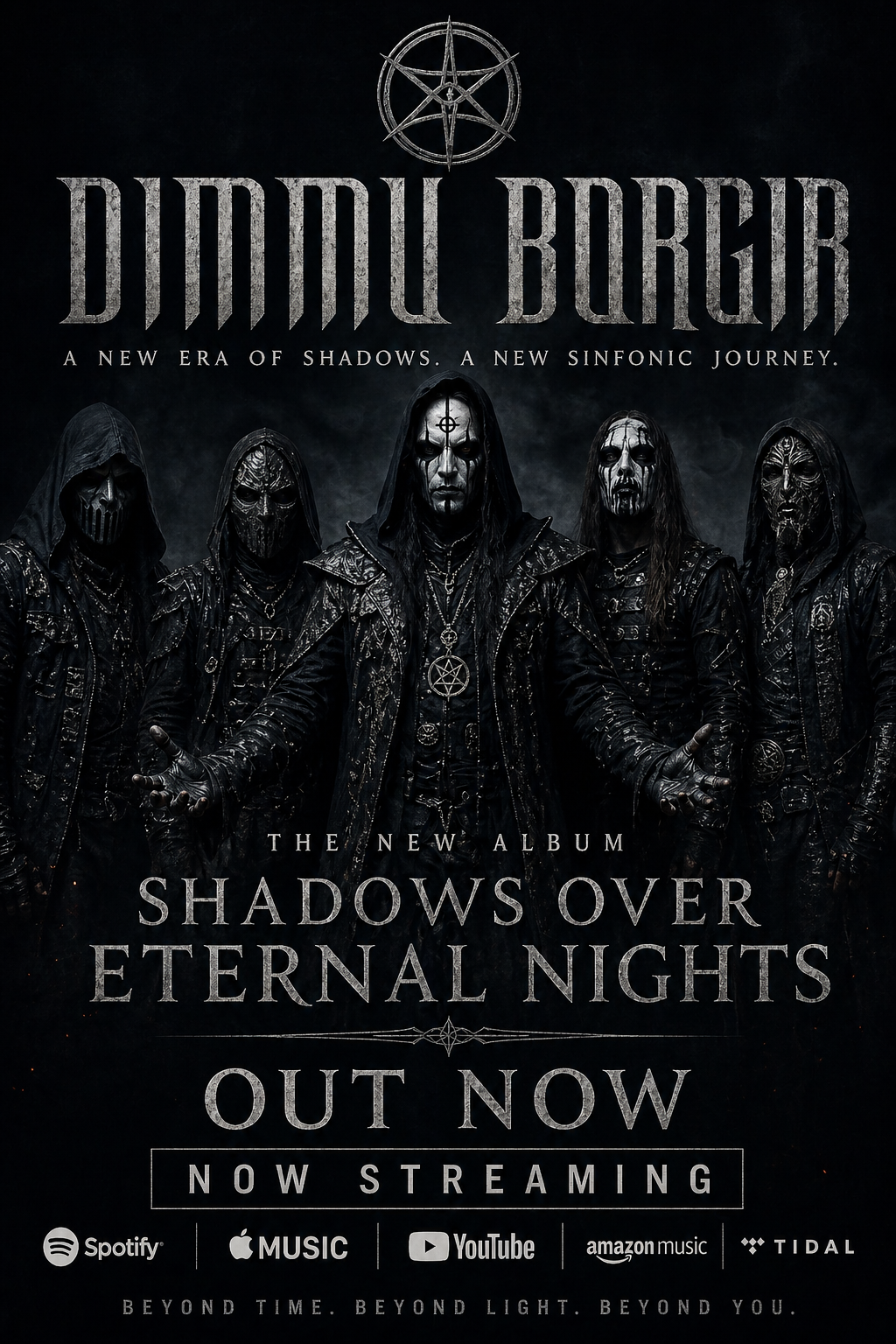
The announcement arrived alongside a haunting promotional image: a lineup of shadowed figures clad in intricate, ominous masks, standing against a bleak, smoke-filled backdrop. It’s a visual that immediately captures attention—cold, commanding, and unapologetically dramatic. For a band that has always leaned into atmosphere and presentation, this shift toward masked anonymity adds an entirely new layer of intrigue.
Fans have long associated Dimmu Borgir with elaborate aesthetics, from corpse paint to orchestral stage performances. But this new masked direction feels different. It’s less about individual identity and more about collective presence. The masks obscure facial expressions, replacing them with symbols, textures, and designs that evoke something almost ritualistic. The result is both unsettling and captivating—perfectly aligned with the band’s sonic evolution.
The new album, titled “Shadows Over Eternal Nights,” is already being described as one of their most ambitious projects to date. Blending their signature symphonic elements with heavier, more aggressive compositions, the record creates a soundscape that feels vast and cinematic. Choirs swell over thunderous drums, while razor-sharp guitar work cuts through layers of orchestration. It’s a balance that few bands can achieve, and Dimmu Borgir executes it with precision.
Lyrically, the album dives deep into themes of darkness, transcendence, and existential reflection. There’s a philosophical edge to the writing—one that explores the boundaries between light and shadow, identity and anonymity. The use of masks in their visual presentation seems to mirror these ideas, reinforcing the concept that what is hidden can sometimes be more powerful than what is revealed.
Early reactions from fans and critics have been overwhelmingly positive. Social media platforms have been flooded with discussions, reactions, and breakdowns of both the music and the imagery. Longtime listeners have praised the band for staying true to their roots while still pushing forward creatively. Meanwhile, newer fans are being drawn in by the sheer scale and intensity of the project.
Streaming numbers are already climbing rapidly, with the album available across all major platforms. This accessibility, combined with the band’s renewed visual identity, has helped them reach audiences beyond the traditional metal scene. It’s a testament to their ability to evolve without losing the essence of what made them iconic in the first place.
The production quality of the album also stands out. Every element—from the orchestral arrangements to the vocal layering—feels meticulously crafted. There’s a sense of depth in each track, encouraging listeners to return again and again to catch details they may have missed. It’s not just music for casual listening; it’s an experience that demands attention.
Visually, the promotional campaign has been just as impactful as the music itself. The masked figures, combined with gothic typography and dark, textured backgrounds, create a cohesive aesthetic that feels almost cinematic. It’s the kind of imagery that could بسهولة translate into live performances, and fans are already speculating about what this new era might look like on stage.
If history is anything to go by, Dimmu Borgir are likely to take this concept even further in their live shows. Their past performances have featured full orchestras, elaborate lighting setups, and theatrical staging. With the addition of masks and a more unified visual identity, the potential for immersive, unforgettable concerts is higher than ever.
There’s also a broader cultural significance to this release. In an age where image and identity are constantly on display, the idea of masking oneself—of stepping back from individuality—feels both counterintuitive and deeply compelling. It challenges the audience to focus not on who the performers are, but on what they create.
Ultimately, this new chapter for Dimmu Borgir is more than just an album release. It’s a statement. A declaration that even after decades in the industry, they are still willing to take risks, to experiment, and to redefine their artistic boundaries.
For fans of symphonic black metal, this is a moment worth paying attention to. And for those unfamiliar with the genre, it might just be the perfect entry point—a dramatic, immersive, and unforgettable introduction.
Now streaming worldwide, “Shadows Over Eternal Nights” isn’t just music. It’s an experience—one that invites listeners into a world where darkness isn’t something to fear, but something to explore.