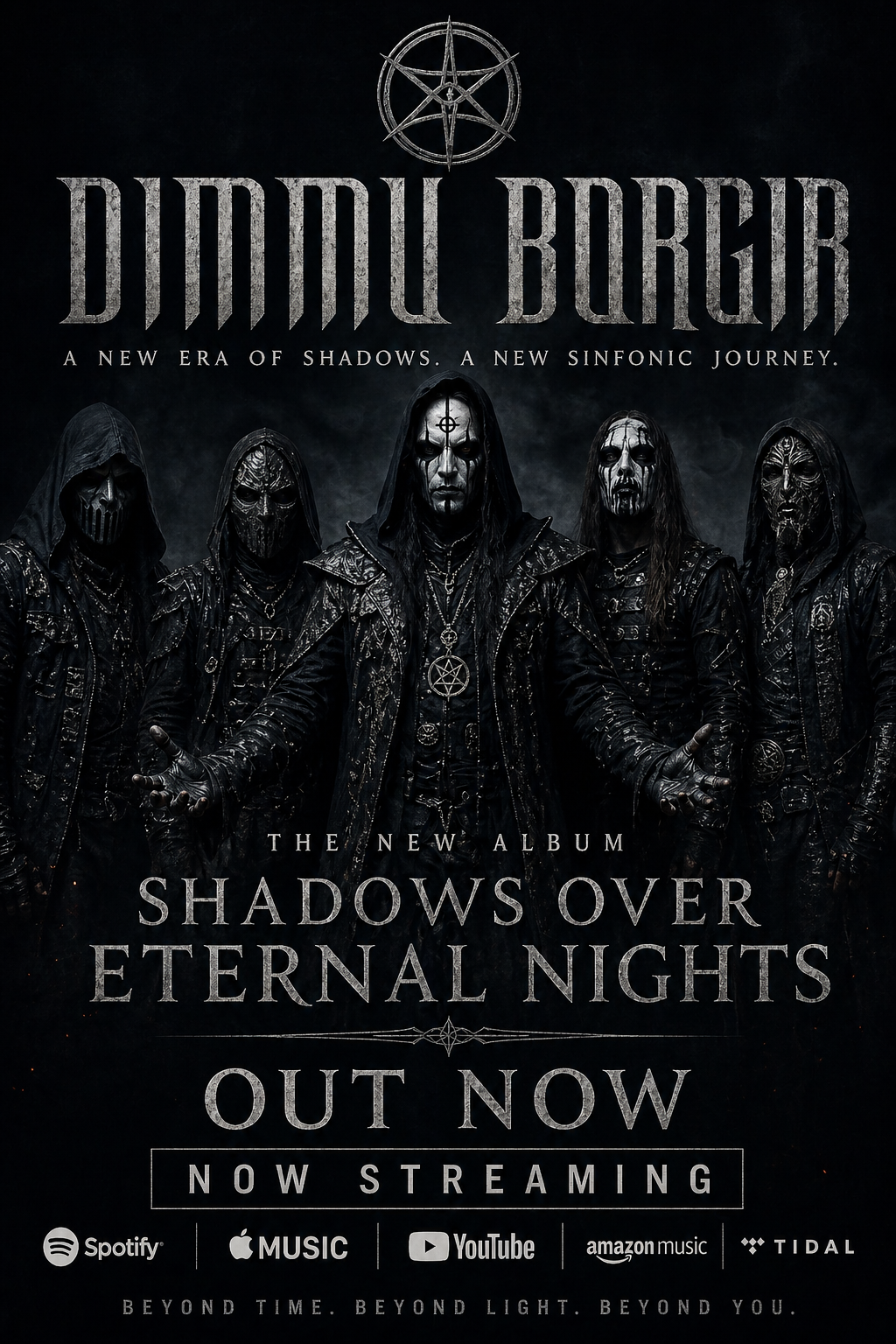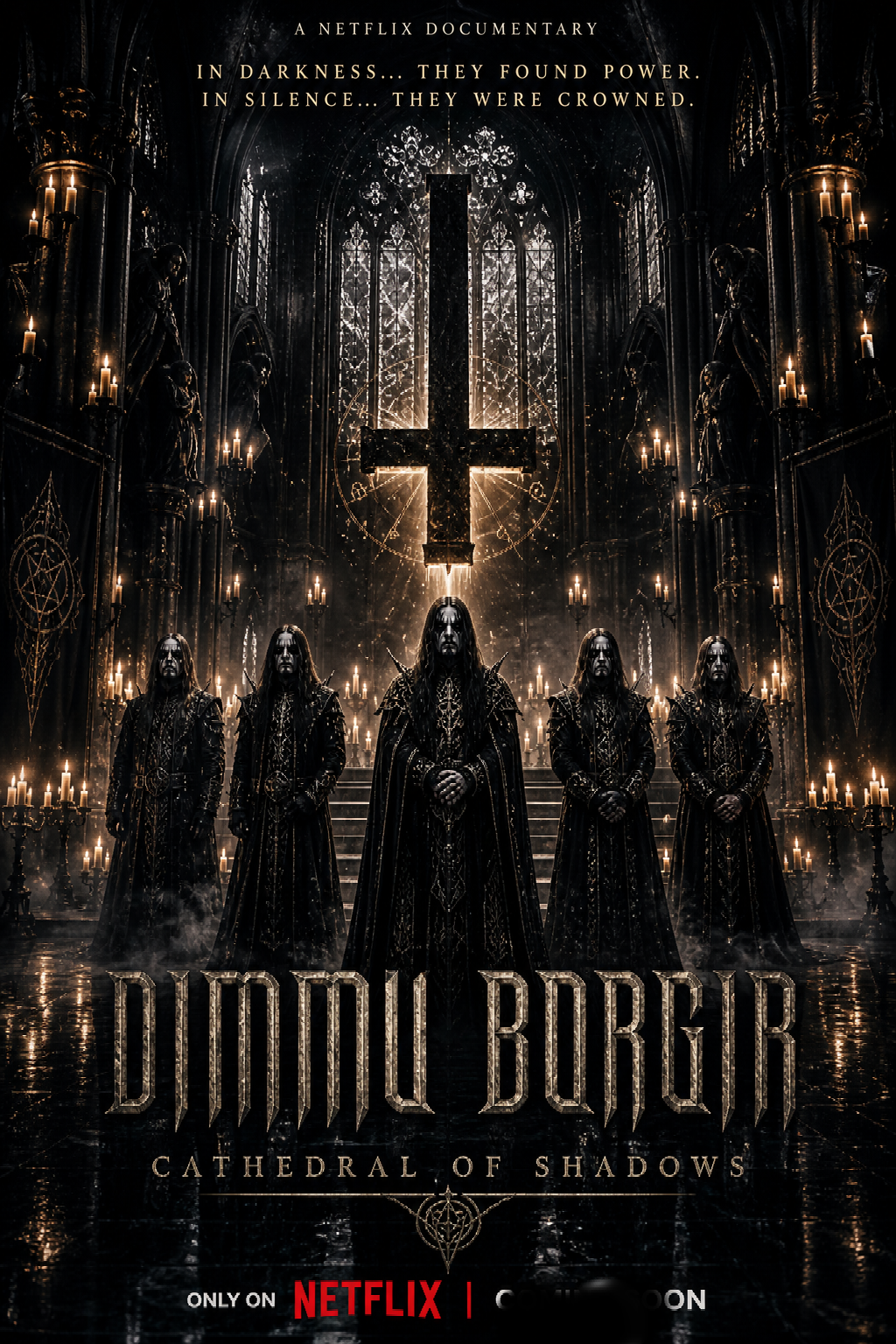

The global metal community is once again turning its attention to the shadows as Dimmu Borgir steps into the spotlight with a powerful new Netflix documentary chronicling their long-awaited world tour. Titled “Beyond the Shadows,” the film captures not just a series of performances, but a cultural phenomenon that has shaped the identity of symphonic black metal for decades.
From the very first frame, the documentary establishes a tone that is both haunting and cinematic. Dark orchestral swells blend with raw, aggressive instrumentation as viewers are transported into the inner sanctum of a band that has long thrived on mystery and theatrical intensity.
 Unlike traditional music documentaries, this project goes far beyond backstage footage and live shows—it dives deep into the philosophy, artistry, and evolution that define Dimmu Borgir.
The world tour itself serves as the backbone of the narrative. Spanning major cities across continents—Los Angeles, London, Tokyo, Berlin, and beyond—the film captures the band’s commanding stage presence and the electrifying energy of their global fanbase. Each location brings its own unique atmosphere, yet the connection between band and audience remains strikingly consistent: intense, emotional, and almost ritualistic. Fans are not just spectators; they are participants in something larger, something almost spiritual.
One of the most compelling aspects of the documentary is its willingness to explore the duality of the band’s identity. On stage, Dimmu Borgir is a force of darkness—faces painted, movements deliberate, music overwhelming. Off stage, however, the film reveals moments of reflection, discipline, and creative collaboration. This contrast adds depth to the narrative, reminding viewers that behind the theatrical imagery lies a group of dedicated musicians constantly pushing the boundaries of their genre.
The documentary also pays significant attention to the band’s musical evolution. Known for blending black metal with symphonic elements, Dimmu Borgir has consistently challenged expectations. Through interviews and studio footage, the film highlights how orchestration, choir arrangements, and cinematic composition have become integral to their sound. It’s not just about heaviness—it’s about atmosphere, storytelling, and scale.
A particularly striking segment focuses on the preparation behind the tour. From intricate stage design to lighting that mirrors the band’s dark aesthetic, every detail is meticulously crafted.
 The production feels less like a concert setup and more like a theatrical performance, reinforcing the idea that Dimmu Borgir operates in a space where music and visual art are inseparable. The documentary captures this process in detail, offering viewers a rare look at the effort required to bring such an ambitious vision to life.
Equally important is the exploration of legacy. Having been a dominant force in black metal for years, Dimmu Borgir carries the weight of expectation with every release and performance. The film doesn’t shy away from this pressure. Instead, it embraces it, showing how the band channels both criticism and praise into their creative output. There’s a sense that this tour—and this documentary—marks a defining chapter, a moment where past achievements and future ambitions collide.
The fan perspective is another key element that elevates the documentary. Interviews with longtime followers reveal just how influential the band has been on a personal level. For many, Dimmu Borgir represents more than music—it’s an identity, a refuge, a source of empowerment. These testimonials add an emotional layer that balances the film’s darker tones, highlighting the profound impact the band has had across generations.
Visually, “Beyond the Shadows” is nothing short of stunning.
 The cinematography leans heavily into contrasts—light versus darkness, chaos versus control. Smoke, fire, and shadow dominate the screen, creating an almost otherworldly aesthetic. Combined with sweeping shots of massive crowds and intimate close-ups of performances, the film achieves a scale that feels both epic and personal.
Sound design plays an equally crucial role. Live recordings are blended seamlessly with ambient elements, creating an immersive experience that places viewers directly in the heart of each performance. Whether it’s the roar of the crowd or the subtle hum of orchestral layers, every detail is carefully balanced to enhance the atmosphere.
What truly sets this documentary apart, however, is its sense of purpose. It’s not simply celebrating a band—it’s documenting a movement. Dimmu Borgir has long stood at the intersection of tradition and innovation within black metal, and this film captures that tension beautifully. It acknowledges the genre’s roots while showcasing how it continues to evolve in new and unexpected directions.
Now streaming on Netflix, “Beyond the Shadows” arrives at a time when music documentaries are more popular than ever. Yet it manages to stand out by embracing its uniqueness rather than conforming to mainstream expectations. It’s unapologetically dark, deeply artistic, and undeniably powerful.
For longtime fans, the documentary offers a deeper understanding of a band they already admire. For newcomers, it serves as an entry point into a world that is as complex as it is captivating. Either way, it’s clear that Dimmu Borgir has once again succeeded in leaving a lasting impression.
In the end, “Beyond the Shadows” is more than just a record of a world tour—it’s a statement. A declaration that the spirit of black metal is alive, evolving, and reaching audiences across the globe. And at the center of it all stands Dimmu Borgir, continuing to push boundaries, challenge perceptions, and redefine what it means to create music from the darkness.